MARINE SCADA / SYSTEM ARCHITECTURE
Onboard intelligence.
Enterprise architecture.
Salt Logic connects yacht systems, operational history and engineering insight. Its edge-to-cloud architecture brings marine SCADA to private yachts, charter operations and superyacht fleets—with local processing and controlled access ashore.
Hardware, interfaces and service scope are specified for each installation.
01 / Integration at the source
Propulsion, generation, electrical distribution, tanks, pumps and environmental sensors enter a common data layer through equipment-specific interfaces. Each signal retains its source, timestamp, units and quality state.
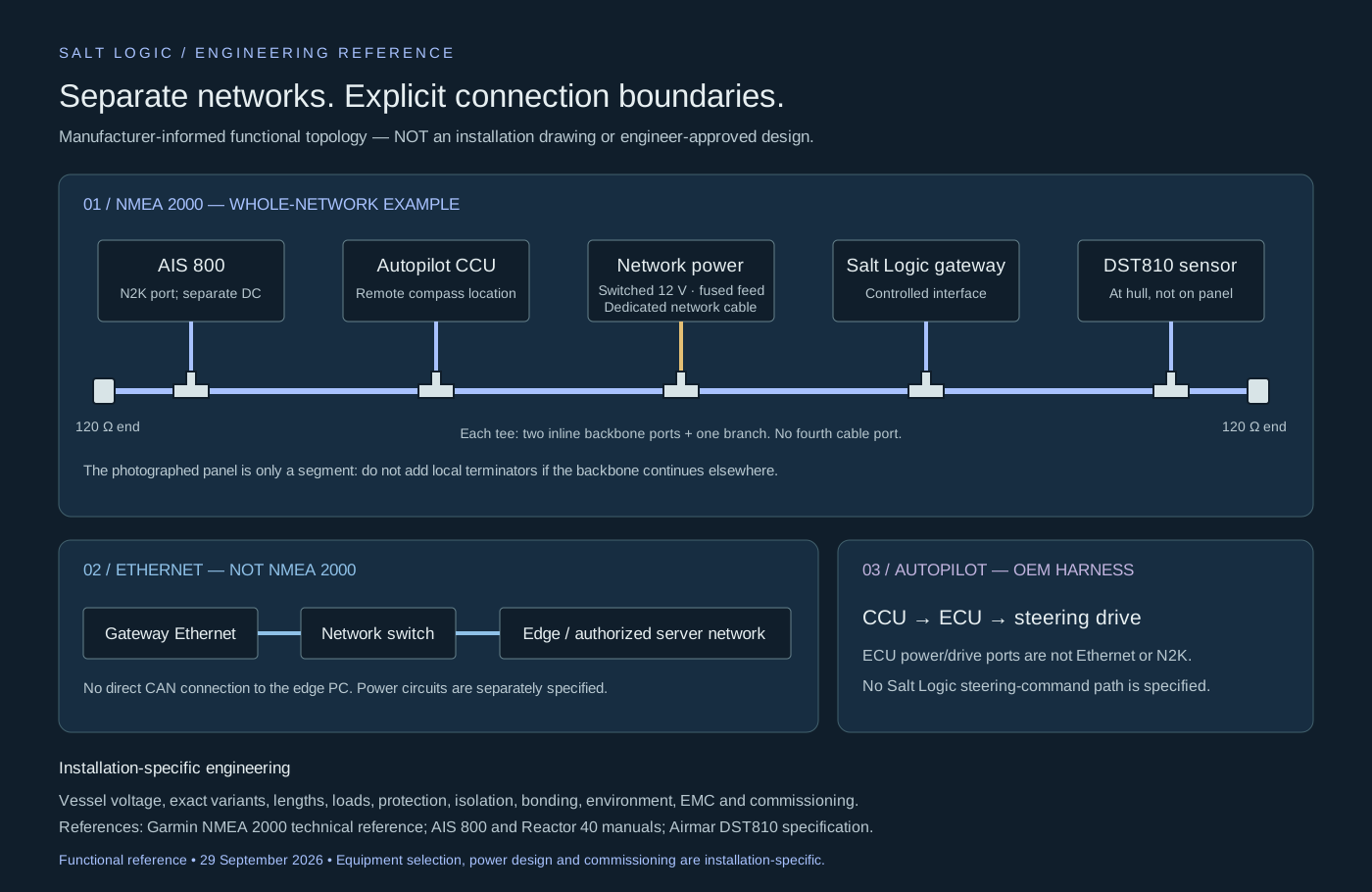
The integration architecture covers marine and industrial networks, serial links, digital I/O, Ethernet, wireless and mesh networks. Interface selection follows the yacht’s equipment and access permissions: NMEA 2000, J1939, NMEA 0183, Modbus, CAN-based systems and documented vendor APIs.
02 / Local acquisition. Persistent history.
The onboard layer separates signal acquisition from shoreside connectivity. Gateways connect local networks; edge processing normalizes readings and maintains a time-series historian—the operational record of the yacht.
Local buffering and store-and-forward synchronization address intermittent uplinks. Timestamps, data-quality flags and stale-data indicators distinguish a current reading from the last known value. Sampling rates, buffer capacity and retention follow the installation profile.
03 / Marine SCADA, in operational context
Trends, alarm states and event history connect individual readings to equipment behaviour. Alarm profiles define thresholds, hysteresis, acknowledgement and escalation; diagnostic views place an event alongside the conditions that preceded it.
- Under way: passage history, propulsion trends, electrical demand and sailing performance.
- Alongside: shore power, battery condition, bilge activity and selected tank, door and hatch signals.
- Between charters: machinery hours, open issues, handovers and service windows.
- Across the fleet: consistent equipment context for crews, operators and authorized service teams.
Salt Logic complements certified navigation, protection and emergency systems; it does not replace them. Monitoring access does not confer steering, switching or machinery-control authority.
04 / From a compact edge to fleet infrastructure
Salt Logic Edge is the compact datalogger and gateway role. Salt Logic Core provides the embedded-compute role for local processing. Salt Logic Ultra adds server-class capacity; Salt Logic Ultra A and Salt Logic Ultra B identify a paired-server configuration.
Deployment follows the operation: compact onboard processing; a local server or engineered redundant pair; company-HQ infrastructure; or hosted and private-cloud environments. Edge-to-shore communication runs directly or through the local server layer. Hardware selection and service scope remain installation-specific.
Signal volume, processing load, retention and fleet size determine capacity. Redundant deployments include replication, failure detection, independent power paths and recovery procedures—not simply a second server.
05 / Security from onboard networks to shore
Salt Logic is based on PKI-backed device and service identity. Network location alone grants no trust. Segmentation separates machinery, management, crew and guest traffic; role-based permissions govern access to yacht and fleet information.
Authenticated links
The security architecture uses encrypted transport across supported local applications, onboard server connections, APIs and yacht-to-shore links. Mutual TLS authenticates both ends of managed device and service connections. Marina, cellular and satellite networks carry the traffic; they do not define the trust boundary.
Legacy NMEA, CAN and serial interfaces sit behind controlled gateways. Their native traffic is not inherently encrypted; the cryptographic boundary begins at the capable gateway or endpoint.
Protected data and managed identities
At-rest protection covers edge buffers, onboard databases, cloud storage and backups. Storage-key custody and recovery are distinct from certificate management. Retention and access policies follow the operator’s data-governance requirements.
The PKI architecture covers enrolment, certificate issuance, renewal, revocation and protected private keys. Certificate lifecycle and disconnected-operation policies account for unreliable links without bypassing certificate checks. Scoped access, audit trails and controlled administration complete the security model.
Clear encryption boundaries
Transport encryption protects connections; at-rest encryption protects stored data. End-to-end encryption restricts decryption to designated endpoints. A cloud service processing readable telemetry is one of those endpoints—not a blind intermediary. Cloud-blind processing keeps decryption and analysis on board or at an authorized private endpoint.
06 / Operational intelligence beyond the yacht
The API layer connects onboard context with weather, forecasts, charter bookings, maintenance records and work orders through authorized service integrations. Each connection has a defined data contract, credential scope and update policy.
For charter operators, this links the technical record to the operating schedule: faster fault investigation, coordinated turnaround work and proactive maintenance based on hours, service intervals and condition trends. Crews, fleet managers, engineers and OEM teams work from the information relevant to their role.
07 / A disciplined AI roadmap
Anomaly detection and predictive diagnostics build on reliable history, equipment context and known operating modes. These remain research priorities, separate from the core SCADA architecture. Engineering judgement governs maintenance and safety decisions.
08 / Network connection reference